Is AI-generated content plagiarism?
Not always.
Yet a low similarity score can still leave you unsure about publishing. This guide shows you how to check copied wording, copyright risk, human input, and AI rules.
Use this simple risk check before you publish with confidence.
Key Takeaways
- AI Is Not Enough: AI use alone does not make your work plagiarism, copied material without credit can.
- Check Source Wording: Rewrite close phrasing, verify the source, and credit borrowed ideas, facts, or quotations.
- Separate Copyright Risk: A citation helps with credit, but it may not solve a permission problem.
- Add Human Judgment: Verify facts, apply your editorial judgment, and revise AI output before sharing it.
- Follow Assignment Rules: Check AI-use and disclosure rules from your client, school, employer, or publisher first.
Quick Answer: Is AI-Generated Content Plagiarism?
Using AI does not automatically make your work plagiarism. However, AI-generated text can create a plagiarism problem when it reproduces distinctive wording, closely paraphrases a source without credit, or presents another person’s original ideas as your own.
The key question is not simply whether you used ChatGPT or another AI writing tool.
- Plagiarism: Did the draft use another person’s words or ideas without proper credit?
- Copyright: Does the final copy reproduce protected expression closely enough that permission may be needed?
- Ownership: What meaningful human-created choices, revisions, selection, or arrangement did you contribute?
- Policy: Does your client, publisher, employer, school, or platform permit AI use or require disclosure?
These issues are related, but they can lead to different answers.
A low similarity score can be reassuring, but it is not a legal verdict or a “safe to publish” score. A report may miss a meaningful copied passage, and it cannot confirm that an AI-supplied fact, citation, or quotation is accurate.
These questions can lead to different answers.
For example, crediting a source may address an attribution problem, but it may not settle a copyright-permission question. Likewise, disclosing AI use does not replace citing the real author of borrowed material.
Bottom line: You remain responsible for the byline, sources, facts, and policy compliance in the final draft, even when AI helped you brainstorm, outline, or write it.
The U.S. Copyright Office’s AI resources explain that copyright questions about human authorship and AI-assisted work are distinct from plagiarism and attribution rules.
This guide offers an editorial risk check, not legal advice, so seek qualified counsel when substantial copying, commercial value, or a rights-holder dispute is involved.
The Four-Question Risk Matrix for AI-Assisted Writing
A useful way to assess AI writing risk is to stop looking for one universal answer. Instead, review the final draft through four separate questions before you publish, submit, or send it to a client.
A draft can pass one question and still fail another. For example, a properly cited passage may still raise a copyright-permission concern, while an original paragraph may still violate a publisher’s AI content disclosure policy.
- Attribution and plagiarism: Did the draft use another person’s words, distinctive ideas, structure, or quotation without clear credit?
- Possible copyright infringement: Does the final copy reproduce protected expression closely enough that removal, replacement, permission, or further review may be needed?
- Human contribution and ownership: What meaningful human choices did you add through reporting, analysis, selection, arrangement, or revision?
- Policy and disclosure: Does a client, employer, publisher, school, or platform allow this AI use and require you to disclose it?
Start with the final copy, not the tool you used. ChatGPT or another AI writing tool may have helped with brainstorming, outlining, editing, or drafting, but the publishing risk depends on what remains in the work and how you handle it.
This distinction matters because plagiarism, AI content copyright, and policy compliance are related but not interchangeable. A low similarity score may be useful evidence, yet it cannot confirm that your sources are credited, your claims are accurate, or your assignment permits AI assistance.
The U.S. Copyright Office’s AI resources also distinguish questions of human authorship in AI-assisted work from plagiarism and attribution standards. Use this matrix as an editorial decision tool, not as a substitute for legal advice when substantial copying, commercial value, or a rights-holder dispute is involved.
Use all four lanes before publishing: Clearing one risk does not automatically clear the others.
Risk 1: Is There an Attribution or Plagiarism Problem?
An attribution or plagiarism problem begins when a draft presents someone else’s words, original ideas, or distinctive structure as if they were yours. The source might be a web page, book, interview, colleague, client document, or material surfaced by an AI tool.
Watch for Copied Wording and Close Paraphrasing
Changing a few words, swapping in synonyms, or moving clauses around does not make distinctive source expression original, whether you rewrite it manually or with a QuillBot alternative. This is often called uncredited paraphrasing. Before publishing, compare any suspicious passage with its underlying source, including its wording, sequence of ideas, examples, and unusual level of detail.
The Purdue Online Writing Lab’s guidance on avoiding plagiarism emphasizes that writers must give credit when they use another author’s words or ideas. That standard still matters when an AI writing tool delivers the wording without showing where it came from.
Example: Safe Paraphrase With a Citation
Suppose a report finds that customers abandon a signup process when it asks for too much information. A safe paraphrase explains that finding in fresh language, adds the writer’s own analysis of why it matters, and links or cites the report near the claim.
The writer is not merely disguising the source sentence, they are accurately crediting the underlying research while contributing a new explanation.
This can move to Publish when the wording is genuinely original, the source supports the claim, and the assignment’s citation and AI-use rules are met.
Example: Uncited Close Paraphrase
Now imagine that an AI tool rewrites a source sentence with synonyms but preserves its sequence, emphasis, and memorable phrases. If you publish that passage without a citation, the fact that AI produced the rewrite does not remove the attribution problem. The final byline is still responsible for what appears in the draft.
Choose Revise & Cite. Return to the source, write the point from your own understanding instead of sentence-swapping, and credit the original idea whenever attribution is required. If the passage adds little value after review, removing it may be the cleanest option.
Treat Quotations as Quotations
If a passage needs its original wording to make the point, treat it as a quotation. Use quotation marks, identify the speaker or author, and follow the citation style required by the client, publication, or school. Do not let AI-generated quotation marks, names, links, or citations pass without checking the original source.
AI content disclosure serves a different purpose. It tells an editor, client, or reader how AI was used, it does not credit the real author of borrowed words, ideas, data, or quotations. One cannot replace the other.
- Quote it when you retain distinctive wording.
- Cite it when you rely on another person’s idea, research, data, or analysis.
- Rewrite or remove it when the passage remains too close to its source.
- Investigate first: review meaningful textual matches in context rather than treating a similarity score as an automatic verdict.
Risk 2: Could the Final Copy Create a Copyright Infringement Risk?
Copyright and artificial intelligence raise a separate question from plagiarism: whether the final copy reproduces protected expression so closely that permission, removal, or further review may be necessary.
Giving credit can be important, but credit alone does not automatically resolve a copyright-permission concern.
The U.S. Copyright Office’s AI resources explain the evolving copyright issues surrounding AI-assisted work and human authorship. This article offers an editorial risk check, not legal advice, so treat uncertain or high-stakes cases carefully.
Look for Substantial Overlap in Expressive Wording
Do not treat a similarity match as a definitive legal test. Still, distinctive passages, lyrics, poems, slogans, product copy, and long excerpts deserve extra caution because their expression may be more identifiable than routine factual language.
Open the source and compare the final passage in context. Look at the wording, length, sequence, and expressive details, then decide whether the safest editorial response is to remove, replace, quote, seek permission, or escalate the issue.
Example: Copied Quotation
Imagine that an AI draft includes a memorable two-sentence quotation from an article, but provides neither quotation marks nor a source. Do not assume that adding a citation makes the excerpt automatically safe to reuse, especially when the wording is central to the original work.
First, verify the quotation against the original source. Then remove it or replace it with your own explanation. Quote and cite it only when appropriate. Seek permission if you cannot safely remove or replace the excerpt.
When to Seek Permission or Legal Advice
Seek permission or qualified legal advice when the copy includes a substantial borrowed passage, the work has significant commercial value, ownership is disputed, or a rights holder raises a complaint. These situations can carry consequences that a routine editorial review cannot resolve.
For most drafts, the practical first step is simple: do not publish questionable borrowed expression unchanged. Remove or replace it where possible, document what you checked, and escalate when the risk or policy requirement is unclear.
Risk 3: What Can You Claim as Human-Created Work?
- AI assistance does not automatically erase your human contribution to a final work.
- Meaningful contributions can include original reporting, analysis, creative choices, selection, arrangement, and substantial revision.
- The U.S. Copyright Office’s AI registration guidance explains that copyright protection applies to human-authored contributions, not material generated solely by a machine. Do not claim untouched AI output as entirely your original authorship.
For high-stakes client, academic, or professional work, keep a simple record of prompts, source notes, major revisions, approvals, and required disclosures. These records can document how you developed the work and help you respond if an editor, client, or instructor asks about your process.
Show the Human Editorial Contribution
- Use AI output as material to evaluate, not text to paste unchanged.
- Strengthen the draft with your own reporting, source evaluation, examples, subject-matter judgment, brand voice, and editorial structure.
- Ask whether you can explain the choices behind the finished piece: selecting evidence, rejecting weak claims, reorganizing the argument, adding informed analysis, and rewriting for a real audience are meaningful human editorial decisions.
Example: An Original AI-Assisted Paragraph Still Needs Review
- An AI-assisted paragraph can use fresh wording and show no meaningful similarity match, yet still make an unsupported claim about an industry trend.
- Verify the claim against a trustworthy primary or authoritative source before treating the paragraph as publishable.
- Choose Revise & Cite until the evidence supports the claim, the wording accurately reflects that evidence, and readers can find the source. If you cannot verify the statement, narrow it or remove it.
Risk 4: Does a Policy Require Disclosure, Limit AI Use, or Ban It?
Before treating AI assistance as acceptable, check the rules that govern the assignment. A client brief, employment agreement, publication guideline, school policy, or platform term may allow some uses, limit others, require disclosure, or prohibit AI-generated material altogether.
For search content, AI use alone is not the issue Google highlights. Google emphasizes helpful, reliable, people-first content and prohibits scaled content abuse, including mass-produced pages created mainly to manipulate rankings. Use an AI SEO content quality-control review to decide whether the finished page serves readers, is supported and distinct, and is ready to publish.
Separate Disclosure From Attribution
Disclosure and attribution answer different questions. AI content disclosure tells a reader, editor, client, or instructor how AI helped create or revise the work. Attribution identifies the real source of borrowed words, ideas, data, research, or quotations.
Disclosure does not replace attribution. Likewise, a correct citation does not automatically satisfy an organization’s AI-use disclosure rule. Follow both requirements when they apply, and ask for clarification before submission when the policy language is vague.
Run a Practical Policy Scan
- Who sets the rule? Identify the client, editor, employer, instructor, platform, or compliance team with authority over the work.
- What use is allowed? Confirm whether AI may support research, brainstorming, outlining, editing, drafting, translation, or image creation.
- Is disclosure required? Check who must receive it, what details to include, and when to provide it.
- What records should you retain? Keep relevant prompts, source notes, approvals, drafts, and disclosure language when the work is consequential.
- Who can approve an exception? Save the policy or written approval with your assignment notes before you submit.
Example: Compliant but Disclosure-Required
A marketing client may permit a freelancer to use AI for outlining and editing, but require that use to be disclosed in the delivery note.
In that case, the writer should follow the agreed disclosure process, verify the final copy, and complete the other risk checks. Choose Publish only after those requirements are met.
The Pre-Publish Decision Gate: Publish, Revise & Cite, Seek Permission, or Escalate
After reviewing attribution, copyright, human contribution, and policy requirements, choose one clear path before the draft leaves your hands.
- Publish: Choose this path when the final draft uses original expression, its claims are verified, sources are credited where needed, and all applicable AI-use or disclosure rules are met.
- Revise & Cite: Choose this path when you find close phrasing, an uncited borrowed idea, an unclear quotation, an unsupported claim, or an AI-supplied citation that needs checking.
- Seek Permission: Choose this path when a protected excerpt, image, lyric, or other material is necessary and cannot be safely removed, replaced, or used under the relevant terms.
- Escalate: Send the issue to an editor, client, instructor, compliance lead, or qualified lawyer when policy is unclear, stakes are high, copying appears substantial, or a rights holder is involved.
Treat the gate as a practical stop point, not a test you can pass with a single similarity percentage. A low score may support your review, but it cannot verify facts, confirm permission, establish ownership, or show that the assignment permits AI assistance.
When the answer is unclear, do not force a quick publish decision. Save the source notes, report results, policy language, and relevant draft versions, then ask the person responsible for approval to decide the next step.
A simple rule helps: publish only when every relevant risk lane is clear. If one lane remains unresolved, choose the action that addresses that issue before you submit, send, or post the work.
How to Read Similarity Results Without Treating Them as a Verdict
A similarity report identifies possible textual overlap. It does not decide whether plagiarism occurred, whether copyright permission is needed, whether a claim is accurate, or whether your AI use follows the applicable policy.
Before publishing, run a plagiarism check on the final draft, then review every meaningful match in the context of the finished work.
Open Meaningful Matches and Assess Them in Context
- Start with the match, not the percentage. Routine phrases, navigation text, properly quoted material, and correctly cited references may inflate a report without creating a substantive concern.
- Open substantial or distinctive matches. Compare the surrounding sentences and source page, not only the highlighted string.
- Look for meaningful borrowing. Ask whether the draft preserves unusual wording, a sequence of ideas, distinctive structure, examples, or analysis from the source.
- Ask the practical questions. What matched, why did it match, and should this passage be rewritten, quoted, cited, removed, or escalated?
- Choose an outcome. A high percentage can include harmless overlap, while a low percentage can still hide an important copied passage. Use the decision gate that fits the passage and its risk.
Verify Every AI-Supplied Citation and Claim
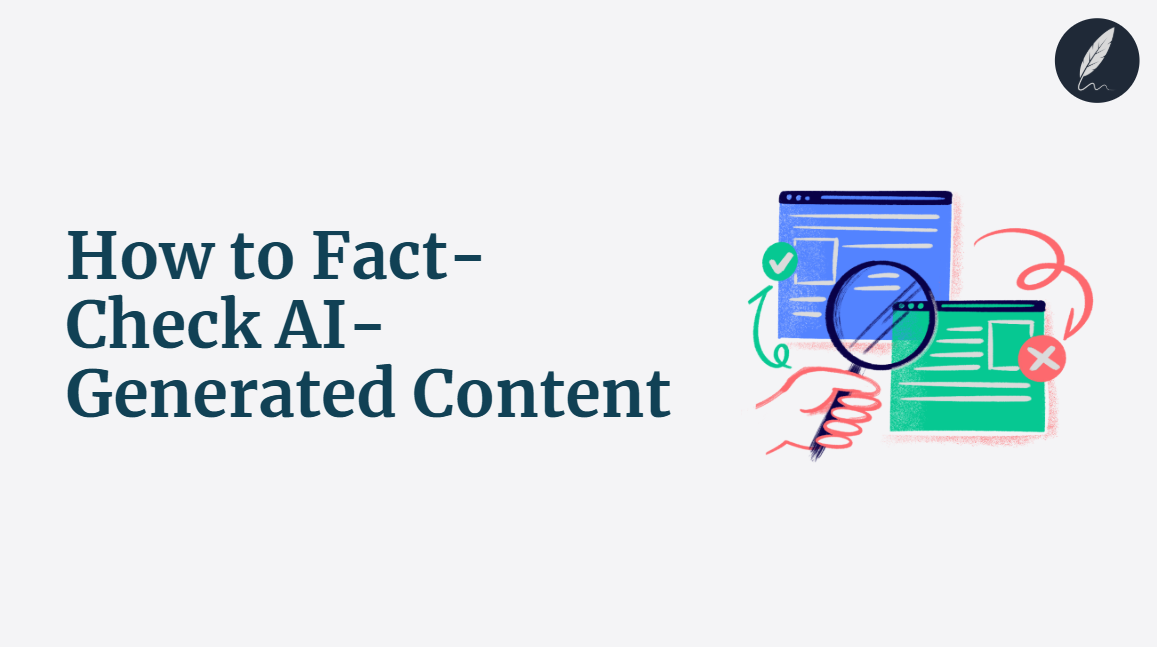
- Open the source yourself. Use a claim-by-claim fact-checking workflow to confirm that the page, article, report, or study exists and comes from the author or organization named in the draft.
- Check the details. Verify the author, publication date, title, quotation, statistic, and link before relying on the citation.
- Test the claim against the evidence. Make sure the source actually supports the nearby statement rather than merely covering the same general topic.
- Cite the original authority. Whenever possible, cite the primary or authoritative source instead of presenting an AI tool as the source of the information.
- Remove what you cannot verify. A paragraph can be original in wording and still fail editorial review because its facts, statistics, or quotations are wrong.
Example: A Fabricated Citation Is Not a Plagiarism Match, but It Is Still a Stop Sign
- Scenario: An AI tool supplies a credible-looking journal title, author name, year, and link for a claim about content performance. When the writer checks, the article cannot be found or does not support the claim.
- Why the similarity report will not help: The paragraph may contain no copied wording at all. The problem is accuracy and source reliability, not a textual match.
- Correct action: Do not publish the citation. Find and verify a real primary or authoritative source, narrow the claim to what the evidence supports, or remove it.
- Decision-gate outcome: Choose Revise & Cite. If the work is high-stakes, the false citation has already been submitted, or the error could materially affect a decision, choose Escalate.
Use Orwellix to Investigate Possible Overlap and Revise in Context
A similarity result is most useful when it leads to a better editorial decision. Orwellix helps you surface possible overlap, inspect source details, and revise the passage within its surrounding argument.
- Open the Plagiarism tab. In the document editor, select Plagiarism in the right sidebar.
- Check the final draft. Select Check Plagiarism to surface possible textual overlap before you publish or submit.
- Investigate meaningful matches. Open the source details and decide whether the passage needs a rewrite, quotation, citation, removal, or escalation.
- Revise in context. Use Agent Mode to propose a contextual rewrite inside the document, then review every tracked change before accepting it.
Run Orwellix’s plagiarism check to surface possible overlap. Then inspect the source details and use Agent Mode to propose a contextual revision where needed. Review every tracked change yourself: a similarity check is a starting point for editorial review, not legal clearance.
After you resolve overlap concerns, complete a final editorial and accuracy pass before you publish. Clear sourcing, verified claims, and a natural voice all matter in the final draft.
Write smarter with Orwellix
The Orwellix AI Capabilities that helps you craft clearer, more effective content.
Conclusion
AI-generated content is not automatically plagiarism. The real test is whether you credit borrowed material, avoid questionable protected expression, apply human judgment, and follow the rules for the assignment.
Together, these checks make a similarity score one useful part of a wider editorial review. Review meaningful matches in context, verify every claim and citation, then choose the right path: publish, revise and cite, seek permission, or escalate.
As AI becomes part of more writing workflows, responsible publishing will depend on careful source review, accurate reporting, and accountable human choices. Tools such as Orwellix can help you investigate possible overlap and revise in context, but your final judgment is what makes AI-assisted work ready to publish.
Frequently Asked Questions (FAQs)
1. Is AI-generated content plagiarism if I wrote the prompt?
No. Writing the prompt does not automatically make every AI-generated sentence plagiarism, but you remain responsible for copied wording, borrowed ideas, and missing citations in the final draft.
2. Can I publish AI content with a low similarity score?
Not automatically. A low similarity score may suggest limited text overlap, but it cannot verify facts, confirm copyright permission, or show that your client or school allows AI use.
3. Do I need to cite sources used in an AI-assisted draft?
Yes. Cite the original source when your final draft relies on another person’s ideas, data, research, or distinctive wording. AI disclosure does not replace attribution to the real author or source.
4. Does adding a citation remove copyright risk?
No. A citation gives credit, but it does not always grant permission to reuse protected expression, such as a substantial passage, lyrics, or highly distinctive copy. Replace questionable material or seek permission when needed.
5. What human work should I add to an AI-assisted article?
Add meaningful editorial judgment through source checking, reporting, analysis, examples, organization, and revision for your audience. Do not treat untouched AI output as entirely your own original authorship.
6. What should I do if AI gives me a citation that I cannot verify?
Do not publish it. Open the source yourself, confirm that it exists and supports the claim, then replace it with a reliable source, narrow the statement, or remove it.
7. When should I escalate an AI writing concern before publishing?
Escalate when copying appears substantial, the policy is unclear, the work is high-stakes, or a rights holder raises a concern. An editor, client, compliance lead, instructor, or qualified lawyer can help determine the next step.
Try Orwellix Free for 7 Days
Experience Orwellix AI Agent's capabilites with risk-free trial. Full access to all features for 7 days. Credit card required to start, you won't be charged until the trial ends.
Start Your Free Trial